For more than two decades, I have organised journeys, events and complex operations for people whose time is measured differently from most of ours.
Fortune 500 executives.
Artists performing in front of thousands.
Families travelling across continents.
People whose schedules leave very little room for uncertainty.
Over the years, I have been asked countless questions about luxury travel.
Which hotel?
Which aircraft?
Which restaurant?
Which destination?
Almost never does anyone ask the question that actually matters.
“What really happens before everything appears effortless?”
That question interests me far more.
Because effortless experiences do not exist.
Only well-managed ones do.
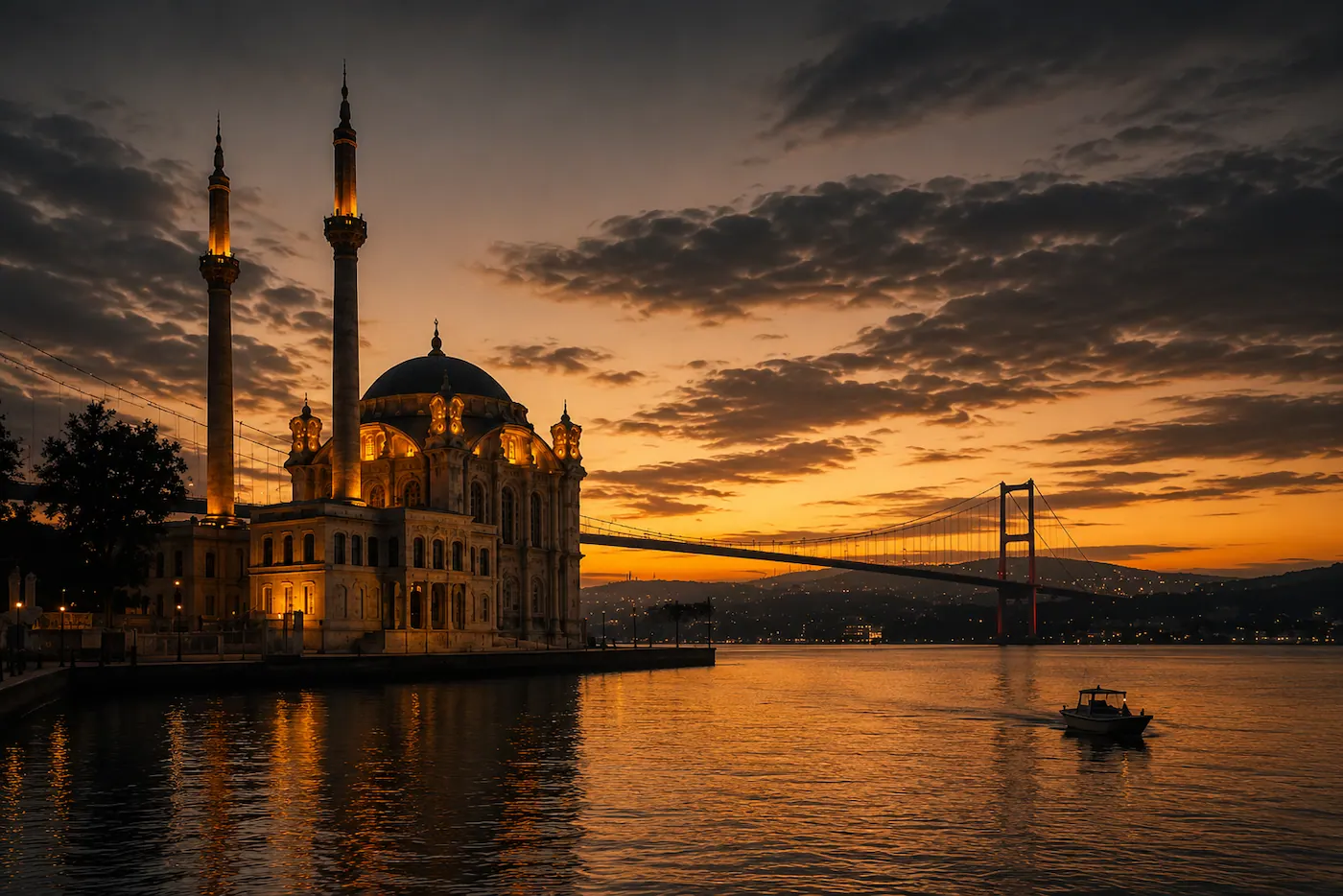
Several years ago, I was standing on the shore of the Bosphorus watching months of planning begin to collapse.
A private event had been carefully designed around one defining moment.
Guests would arrive by yacht.
Timing had been rehearsed.
Every supplier knew their role.
Weather conditions were good.
Everything appeared ready.
Then one detail changed.
The larger yachts could not approach the venue because the water was shallower than expected.
Nobody had predicted it.
Within minutes, the centrepiece of the evening had disappeared.
At least, that was how it looked from the outside.
Inside the operation, something entirely different happened.
Phones came out.
Alternative routes were mapped.
Local captains were contacted.
Smaller boats that had never been part of the original plan suddenly became the solution.
Within a remarkably short time, guests arrived almost exactly as intended.
Most of them never realised anything unusual had happened.
The event continued.
Photographs were taken.
Dinner was served.
Conversations flowed.
The evening became a success.
Years later, many people still remember that event.
Almost nobody remembers the problem.
That is exactly how it should be.
People often imagine operations as a sequence of visible activities.
Flights.
Hotels.
Vehicles.
Reservations.
Guides.
Restaurants.
Those are the easiest parts to describe.
They are also the least interesting.
The real work happens long before the guest sees any of them.
It begins with questions.
What if the preferred route is suddenly closed?
What if the keynote speaker changes their arrival time?
What if one family decides, at the last minute, that they no longer want today's programme?
There is no shortage of things that can go wrong.
The shortage is usually in people who have already imagined them.
Preparation is often misunderstood.
People think preparation means building the perfect plan.
I disagree.
Preparation means accepting that the first plan may not survive the first unexpected phone call.
One lesson has stayed with me throughout my career.
No operation has ever unfolded exactly as it was originally designed.
Not one.
Some changes are so small that only the team notices.
Others force an entire operation to be redesigned within minutes.
Neither surprises me anymore.
In fact, I become more concerned when everything appears to be going perfectly.
That usually means we simply have not discovered the problem yet.
Experience changes the way you look at uncertainty.
When you are new, you hope nothing goes wrong.
After enough years, you stop hoping.
You prepare instead.
There is an important difference.
Hope is not a strategy.
Preparation is.
People sometimes describe luxury as comfort.
Others describe it as exclusivity.
Some define it by price.
I have never found those definitions particularly useful.
The most valuable luxury I encounter is something much quieter.
It is the absence of unnecessary decisions.
A traveller should not have to wonder whether the driver has arrived.
An executive should not have to think about luggage while preparing for a board meeting.
Parents should not spend a family holiday managing logistics instead of creating memories with their children.
Every unnecessary decision consumes attention.
Attention is finite.
Protecting it has become one of the most valuable services any professional can offer.
That is true far beyond travel.
It is true in leadership.
In hospitality.
In healthcare.
In aviation.
In business.
The best professionals remove complexity before someone else has to carry it.
Clients only see a small part of any successful operation.
I sometimes estimate that they experience perhaps twenty percent of the work involved.
The remaining eighty percent is deliberately hidden.
Hundreds of emails.
Dozens of phone calls.
Supplier negotiations.
Alternative suppliers.
Backup vehicles.
Revised schedules.
Permit confirmations.
Weather reports.
Security briefings.
Last-minute adjustments.
None of these are particularly glamorous.
Nor should they be.
When guests notice logistics, something has already gone wrong.
The invisible part of the operation is the operation.
Everything else is simply its visible result.
One misconception about experience deserves to disappear.
People often assume that experience means having seen everything before.
It doesn't.
Every operation presents something new.
Every destination changes.
Every supplier changes.
Every traveller changes.
Technology changes.
Regulations change.
Politics changes.
Weather changes.
Experience does something far more valuable.
It changes how quickly you recognise patterns.
It teaches you which problems deserve immediate attention.
More importantly, it teaches you which ones do not.
Not every problem is a crisis.
Treating everything like one usually creates bigger problems than the original issue itself.
Judgement matters more than knowledge.
Knowledge tells you what is happening.
Judgement tells you what deserves your attention first.
Those are rarely the same thing.
Looking back, I no longer remember every hotel we booked.
Or every aircraft.
Or every itinerary.
I remember moments.
A phone ringing thirty minutes before everyone else's.
A supplier who answered in the middle of the night.
A driver who quietly solved a situation before mentioning it.
A guide who understood that a family needed silence rather than another historical story.
Those moments rarely appear in brochures.
They rarely appear on invoices.
Yet they are often the reason an operation succeeds.
Over time, I realised we were never really organising travel.
Travel is only part of the answer.
Hospitality is another.
Operations certainly are.
Our work is to make uncertainty feel as though it never arrived.
When the Plan Disappears
One of the biggest misconceptions about operations is that success comes from having the perfect plan.
It doesn't.
Success comes from knowing what to do when that plan disappears.
I learned that lesson many years ago.
Not in a meeting room or from a management book, but from watching airports across Europe slowly shut down.
When Eyjafjallajökull erupted in Iceland, its name quickly became famous around the world.
The ash cloud was unlike anything the aviation industry had experienced in decades.
Flights were cancelled.
Aircraft were grounded.
Passengers waited.
Airports filled with uncertainty.
News channels reported numbers.
Thousands of cancelled flights.
Millions of affected passengers.
The scale was extraordinary.
But statistics never tell the whole story.
Behind every cancelled flight was an individual trying to reach somewhere important.
A business meeting.
A family celebration.
A performance.
A medical appointment.
A holiday planned for months.
Every traveller suddenly had the same question.
“What now?”
For many people, there was no answer.
For us, there had to be.
We stopped thinking about flights.
We started thinking about movement.
If aircraft could not fly, people still had to travel.
Europe had not disappeared.
Its roads were still there.
Its borders were still open.
Drivers became our airline.
Highways became our air routes.
Hotels became transfer points instead of destinations.
Journeys that had originally been measured in hours suddenly had to be redesigned across countries.
It required hundreds of conversations.
Dozens of decisions.
Constant adjustments.
No textbook had prepared anyone for that situation.
Experience had.
Not because we had seen a volcanic eruption before.
Because we had learned to stop asking,
“How was this supposed to happen?”
and start asking,
“What is still possible?”
That question changes everything.
Years later, I realised that this way of thinking extends far beyond travel.
Most people define a problem by what has been lost.
Experienced operators define it by what remains.
One route disappears.
Another still exists.
One supplier becomes unavailable.
Someone else is already being called.
One schedule changes.
The objective has not.
The destination is rarely the problem.
Only the route changes.
Another operation taught me something equally important.
An event involving roughly two hundred guests had been planned for months.
Every arrival had been coordinated.
Vehicles assigned.
Timing calculated.
Staff briefed.
Like every large operation, it looked calm from the outside.
Inside, hundreds of moving parts depended on each other.
Then, shortly before guests were due to arrive, plans began to change.
Not one.
Many.
Arrival times shifted.
Requests changed.
People who were expected together suddenly travelled separately.
Some decided to attend different parts of the programme.
Others changed their priorities altogether.
Nothing had gone wrong.
People had simply changed their minds.
That happens more often than most planning documents admit.
The greatest variable in any operation is rarely technology.
It is people.
Human beings are wonderfully unpredictable.
They change their opinions and their schedules.
They forget, improvise, become tired and impatient.
Sometimes they simply decide they would rather do something else.
No software can eliminate that.
No spreadsheet can predict it perfectly.
The job is not to control people.
It is to absorb the consequences of change without allowing the experience to fracture.
That is a very different skill.
When people think about risk, they often imagine dramatic events.
Storms.
Political unrest.
Mechanical failures.
Security incidents.
Those risks exist.
They deserve respect.
Yet the risks that concern me most are usually much smaller.
Someone forgets to mention a detail.
A confirmation email is assumed rather than checked.
A supplier interprets an instruction differently.
A meeting runs fifteen minutes late.
A passport is placed in the wrong bag.
Individually, these sound insignificant.
Combined, they can reshape an entire day.
Large failures rarely arrive all at once.
They accumulate quietly.
One overlooked detail becomes another.
One assumption supports the next.
Eventually the structure collapses under the weight of small mistakes that nobody considered important.
That is why discipline matters so much.
Not because every detail is equally important.
Because nobody knows in advance which detail will become important.
People sometimes ask me what keeps me awake before a major operation.
They expect the answer to be weather.
Or security.
Or politics.
Those matter.
But they are not my first concern.
People are.
Not because people create problems.
Because people create uncertainty.
A vehicle can be replaced.
A reservation can be changed.
An aircraft can sometimes be substituted.
Human judgement has no immediate replacement.
One distracted decision.
One misunderstood instruction.
One conversation that never happens.
That is often enough.
The most expensive mistake in operations rarely takes an hour.
Sometimes it takes one second.
One moment when somebody stops paying attention.
Everything afterwards is simply the cost of recovering that second.
As my career progressed, I noticed something else.
Clients often thanked us for solving problems.
I appreciated the compliment.
But it never felt entirely accurate.
Our best work was usually invisible.
The problems they thanked us for were the few that reached them.
Most never did.
They disappeared long before they entered the client's day.
That is the standard I have always believed in.
If a guest notices every challenge we overcame, we have probably shared too much of the operation.
Professionalism is not measured by how impressively we solve visible problems.
It is measured by how many problems never become visible at all.
There is another reason I rarely describe operations as stressful.
Stress is real.
Pressure is real.
But panic is optional.
Teams borrow emotional direction from whoever leads them.
If the leader becomes chaotic, chaos spreads.
If the leader remains calm, solutions appear faster.
Calmness is often misunderstood as confidence.
Sometimes it is simply discipline.
The decision to think clearly before reacting emotionally.
That decision can change an entire operation.
And sometimes, it changes far more than that.
The Weight of Responsibility
The longer I have worked in this profession, the less interested I have become in luxury itself.
I have become far more interested in responsibility.
Luxury is easy to photograph.
Responsibility isn't.
No guest remembers the hundreds of conversations that happened before their arrival.
No family sees the route that was abandoned because traffic conditions changed.
No executive knows how many alternative schedules were prepared before boarding a flight.
Nor should they.
Responsibility is most valuable when it remains invisible.
People often ask what makes a journey feel effortless.
The answer is rarely found in the destination.
It begins much earlier.
Someone has already worried about the things the guest never had to, questioned every assumption, imagined what might happen if the original plan failed.
That invisible work creates visible calm.
It is easy to confuse calm with simplicity.
They are not the same.
Some of the calmest operations I have ever witnessed were also the most complex.
The difference was never complexity.
It was who carried it.
Over the years, I have realised that our clients are not really buying travel.
Travel is simply the environment in which we work.
What they are really asking us to do is carry responsibility.
An executive delegates decisions because their attention belongs elsewhere.
Parents delegate logistics because they want to spend their energy on their children.
A family office delegates coordination because it already has enough complexity to manage.
An executive assistant delegates pressure because they know someone else is prepared to carry it.
That last point deserves more attention than it usually receives.
Executive assistants rarely appear in travel articles.
They should.
Many of the finest professionals I have worked with have never appeared in front of a camera.
Their success is measured by the absence of problems.
If they do their job well, nobody notices.
That sounds familiar.
Perhaps because it is exactly how operations should work.
Whenever we support an executive assistant, our objective is simple.
If something goes wrong, we deal with it before they have to.
Pressure should travel down the chain of responsibility.
Not up it.
That principle has shaped countless decisions throughout my career.
People sometimes assume experience is the most valuable quality in this business.
Experience matters.
I would never argue otherwise.
But experience alone has never impressed me.
I have met people with decades of experience who still made poor decisions.
I have also met younger professionals whose judgement was extraordinary.
The difference was rarely technical knowledge.
It was character.
Character reveals itself when nobody has prepared a script.
When the unexpected happens, pressure rises and there is no obvious answer, some people protect themselves first.
Others protect the operation.
That difference cannot be taught in a classroom.
It is revealed over time.
Whenever I choose who I want beside me during an important operation, I think less about résumés than reactions.
When the plan changes, I watch how people think, communicate and take responsibility or look for someone else to blame. That tells me far more than any résumé ever could.
Pressure is an excellent editor.
It removes performance.
What remains is character.
One lesson has become stronger with every passing year.
Saying "no" is often much easier than asking one more question.
I have always been uncomfortable with impossible.
Not because everything is possible.
It isn't.
But because many things described as impossible are simply unexplored.
Another supplier may exist.
Another route may still be open.
Another conversation may change everything.
Persistence should never become stubbornness.
But neither should the first rejection become the final answer.
Some of the experiences I remember most clearly began with somebody saying,
“That cannot be done.”
Occasionally they were right.
More often, they simply had not met the person willing to keep looking.
People often define luxury by what money can buy.
I understand why.
Money opens many doors.
It creates opportunities and expands choice.
But after many years working with people who already possess extraordinary resources, I have come to a different conclusion.
Money changes what is available.
It does not change what matters.
One family may own several homes around the world.
Their greatest luxury is a weekend during which nobody needs to check a phone.
An executive may travel by private aircraft.
The greatest gift is arriving mentally present rather than mentally exhausted.
Another guest may have access to almost any restaurant.
What they truly value is an uninterrupted evening with people they rarely have time to see.
Luxury becomes deeply personal once basic expectations have already been met.
That is why standardisation eventually reaches its limit.
No template can define what matters most to another human being.
The conversation always begins there.
With people.
There is another misconception about our profession.
People think our responsibility ends when the itinerary is confirmed.
In reality, that is often where it begins.
A beautifully designed itinerary has very little value if it cannot adapt.
Flexibility is not the opposite of planning.
It is evidence that planning was done properly.
A rigid operation usually breaks.
A resilient one bends.
That principle applies far beyond hospitality.
It applies to leadership, to organisations, to families and to life.
Looking back, I no longer measure success by how complicated an operation was.
Nor by how exclusive it appeared.
I ask myself a much simpler question.
Did the people involved feel free to focus on what actually mattered to them?
If the answer is yes, then the operation succeeded.
Even if they never realised why.
Perhaps especially then.
Because the finest operations are not remembered for their complexity.
They are remembered for how naturally life seemed to unfold while someone else was quietly carrying the weight.
The Standard
When people ask what standard we follow, they usually expect me to describe procedures.
Checklists.
Response times.
Supplier selection.
Quality control.
Those things matter.
Every professional organisation needs them.
But they are not the standard.
They are only its visible expression.
The standard begins somewhere much quieter.
Long before a booking is confirmed, a vehicle arrives, an aircraft leaves the ground.
It begins with a decision.
A decision to accept responsibility before anyone asks you to.
Looking back over the years, I no longer believe excellence is built on perfection.
Perfection is fragile. Sometimes a single unexpected change is enough.
Responsibility survives all of them.
Perhaps that is why I have never been particularly interested in describing our work as flawless.
Flawless suggests that nothing went wrong.
That has never been true.
What matters is something else.
When something does go wrong, who notices first?
Who takes ownership?
Who starts looking for a solution before looking for an explanation?
That is where standards reveal themselves.
Not in comfort.
In pressure.
Every industry talks about service.
Fewer talk about judgement.
And yet judgement shapes almost every important decision.
Which supplier should receive one more chance?
When should we stop searching for alternatives?
When should we advise a client to change their mind?
When should we challenge an itinerary we designed ourselves?
None of those answers appear in a manual.
Experience helps.
Judgement decides.
People sometimes assume trust is built through promises. I have never believed that. Trust is built through repetition. By making sound decisions consistently, regardless of the country, the circumstances or the client. Eventually, people stop asking what you will do. They already know. That is trust.
As I have grown older, my definition of success has become smaller.
I no longer measure it by the number of countries we operate in.
Nor by the number of flights arranged.
Nor by the value of a journey.
Those numbers describe activity.
They do not describe impact.
Instead, I ask different questions.
Did someone feel looked after?
Did someone arrive less exhausted than they expected?
Did a parent spend more time with their child?
Did an executive walk into an important meeting focused instead of distracted?
Did an assistant finish the day without carrying unnecessary pressure home?
Those answers matter more to me than any operational statistic.
Because those are the things people remember.
Even if they never realise why they happened.
Earlier, I wrote that clients probably experience only twenty percent of our work.
The remaining eighty percent stays behind the curtain.
That is intentional.
Recognition has never been the objective.
The objective is freedom.
Freedom to think about a presentation instead of traffic.
Freedom to enjoy dinner instead of checking confirmations.
Freedom to experience a destination instead of managing it.
Freedom is rarely created by adding more.
Quite often, it is created by removing what never needed to reach the guest in the first place.
That is the work.
Over the years I have noticed something interesting.
The operations I remember most clearly are rarely the easiest ones.
They are the ones that demanded difficult decisions.
The ones that forced us to rethink everything we believed only hours earlier, and reminded us that planning is important, but judgement is indispensable.
Those operations shaped our standards far more than our successes ever did.
Success confirms what already works.
Difficulty forces improvement.
Every challenge leaves something behind.
A better process.
A stronger relationship.
A sharper instinct.
A quieter confidence.
Standards are built that way.
One decision at a time.
If there is one idea I hope remains after this article, it is not about travel.
Nor hospitality.
Nor concierge.
It is much simpler.
The finest professionals are rarely remembered because they solved spectacular problems.
They are remembered because other people were free to focus on what mattered most.
That is true in hospitality.
It is true in leadership.
It is true in medicine.
In aviation.
In education.
In every profession built on responsibility.
The work changes.
The principle doesn't.
I sometimes think back to that evening on the Bosphorus.
The guests laughed, talked, watched the sunset and raised their glasses. The evening unfolded exactly as they hoped it would.
What they never saw were the conversations taking place elsewhere only a short time before.
And I have always believed that is how it should be.
Because the highest compliment our profession can receive is not,
“Everything was perfect.”
It is something much quieter.
“I never had to think about it.”
For me, that has always been the real standard.